


Why the Experiment Still Matters More Than the Model
Previously, in Part 1 (skip ahead if you’ve just read it)
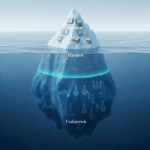
Any piece of causal human biology sits in one of three tiers: known (established in the published literature), hidden (latent in data we’ve already generated but not yet extracted), or unknown (not yet revealed by any data, because the experiments haven’t been run).
Which tier applies depends on the question. For drug discovery, there are three: the disease-level question (is this gene causal, and in which direction?), the mechanistic-driver question (through what pathway, in which tissue?), and the therapeutic-intervention question (can it be safely modulated for clinical benefit?).
Two lessons followed. Lesson #1: the answer depends on the application. Judged by clinical trial outcomes, we know roughly 10% of the causal biology relevant to drug discovery. Lesson #2: it varies sharply by disease area, from lipid disorders, where much is known, to psychiatric disease, where most is not.
One gene, FNIP1, stood out in a million-person study of lipid metabolism, with an effect size well beyond the rest. Part 2 starts there.
FNIP1, revisited: one gene, three questions, three different tiers
FNIP1 was one of 59 genes identified in the Regeneron Genetics Center’s exome-wide association study looking at fat-storage capacity and it is a useful test case because its three questions land in three different tiers.…