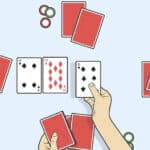
In a previous blog post, I argued that pharmaceutical Research and Development (R&D) is more like poker than chess given the probabilistic nature of developing new medicines. In this blog, I build out this argument further and introduce a new concept, the Critical Value Creation Period (CVCP). The CVCP is the moment in R&D where the probability of success (PoS) for an investigational medicine becoming a new medicine jumps substantially. For most investigational medicines, this period is in early clinical development. By analogy, early development is like the “flop” in Texas hold ’em poker. Stay with me on this one…hopefully this will become clear by the end of this blog post!
Here, I first build out the CVCP argument, which is modeled after an investment thesis proposed by Bain Capital Life Sciences (see here for a presentation by Dr. Adam Koppel at BCLS). Then, I introduce the poker analogy – with focus on the flop. Next, I discuss practical implication of the CVCP model on decision making in biopharma. Finally, I provide two brief case studies that reinforce these concepts. For those not interested in poker, you can skip the second section and focus on the first, third and fourth sections.…
Read full article...
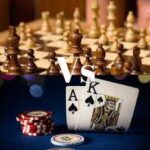
[Disclaimers: I am an employee of Bristol Myers Squibb. The views expressed here are my own. Also, I am not a particularly good poker or chess player. It is one reason I am a popular invited guest to poker nights with friends.]
I posted on poll on Twitter to ask the question is drug discovery more like poker or chess. There were over 300 responses, with the results split nearly equally (54% poker, 46% chess).
My answer to the question, “Is drug discovery more like poker or chess?”, derives from the following truths:
Poker is a game of skill and chance, where critical information about how to win is hidden. In poker, one has to make probabilistic decisions with incomplete information.
Chess is a game of pure skill, where all information is available and – for the best players – decisions are deterministic. Unlike poker, chess contains no hidden information and very little luck.
Thus, my “answer” to the question is drug discovery is more like poker than chess – largely because of available information (poker = incomplete, chess = complete) and the importance on probabilistic (poker) vs deterministic (chess) decision-making. Here is more context.
Thinking in bets
I recently read the book “Thinking in Bets” by poker champion Annie Duke (@AnnieDuke).…
Read full article...